Bluefield State Convenes Regional Leaders for Engineering Appalachia Executive Roundtable
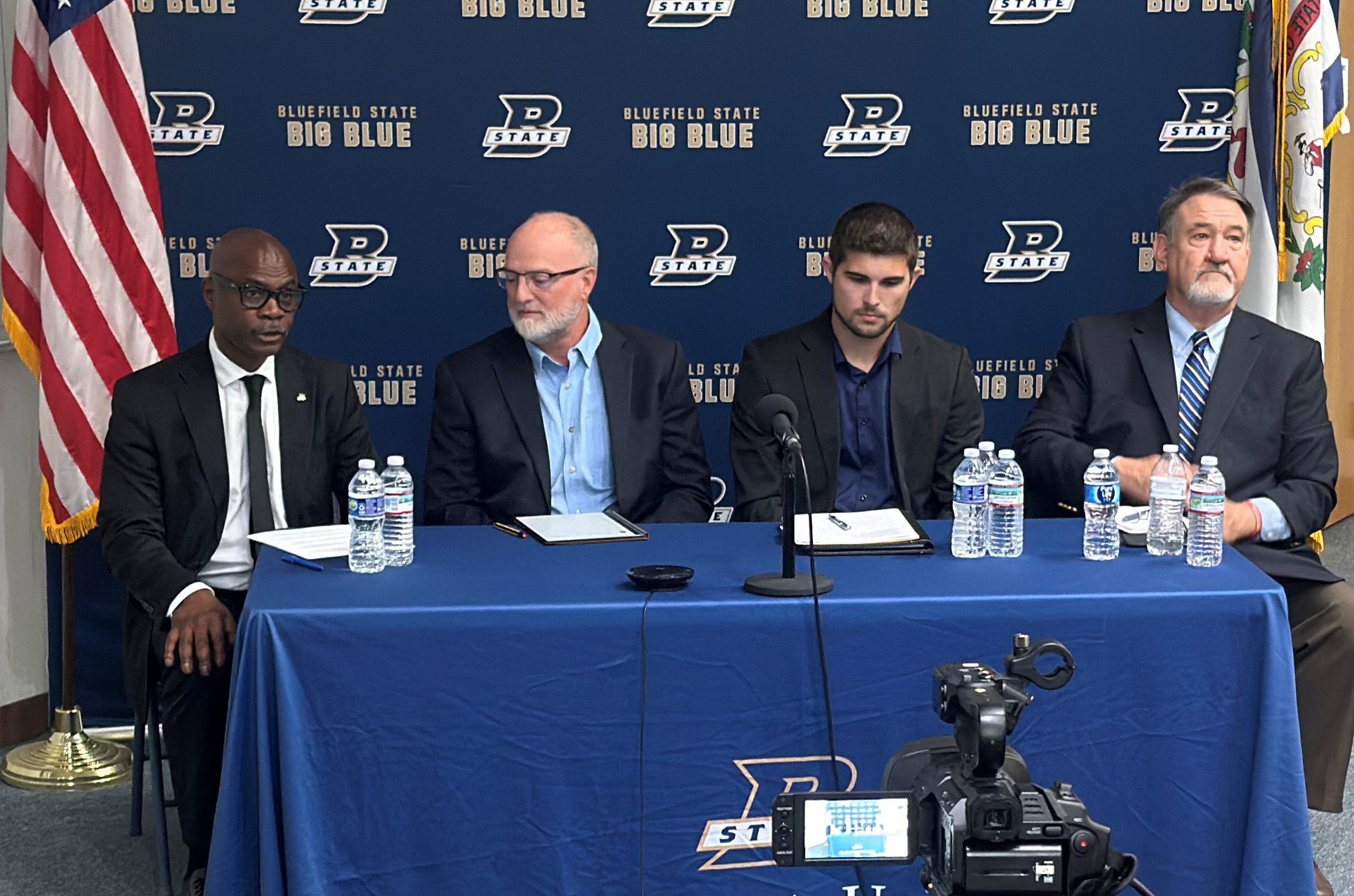
Bluefield State University brought together leaders from business, government, higher education and economic development Monday for the Engineering Appalachia Executive Roundtable, a discussion focused on preparing the workforce to meet the region’s growing demand for engineers and technical professionals.
Hosted by President Darrin Martin, the one-hour event explored workforce development, engineering education, economic opportunity and the partnerships necessary to strengthen Appalachia’s future. The discussion also highlighted Bluefield State University’s recently launched Master of Science in Engineering Technology, one example of how the university is responding to the region’s growing need for advanced technical talent.
Panelists included Marvin Woodie, Conn-Weld Industries president; James “Jim” Spencer, regional administrator for the U.S. Small Business Administration’s Mid-Atlantic Region; Del. Chris Toney, member of the West Virginia House of Delegates; and Ethan Harvey, Bluefield State faculty member and alumnus.
“Bluefield State is, first and foremost, a workforce provider. We are committed to supporting the workforce priorities identified by Governor Morrisey and the West Virginia Legislature by preparing graduates for the careers our employers need to fill. That begins long before students arrive on campus. Through partnerships with our local school systems, we are introducing young people to engineering and technology, showing them that STEM is attainable and helping them see a future for themselves here in West Virginia.”
Bluefield State President Darrin Martin
Harvey said preparing tomorrow’s engineers requires creating clear pathways from high school through graduate education.
“We want students to know they can build momentum from high school to college and beyond,” Harvey said. “Our new Master of Science in Engineering Technology gives graduates and working professionals another opportunity to advance their careers while staying connected to the industries and communities they serve. Every new skill opens another door, and our job is to help students walk through it with confidence.”
Del. Toney said the region’s future depends on strengthening partnerships between education, industry and government.
“The next five years present an incredible opportunity for southern West Virginia,” Toney said. “We want our talented young people to know they do not have to leave the state to build a successful career. By connecting our schools, higher education and employers, we can give students the skills, confidence and opportunities they need to succeed. My job in the Legislature is to listen, remove barriers and support the partnerships that are making that happen.”
Panelists examined the workforce challenges facing employers, expanding opportunities for engineering graduates and the importance of connecting students with careers that will strengthen West Virginia’s economy. Throughout the discussion, participants emphasized collaboration among K-12 education, higher education, government agencies and private industry as the key to developing the skilled workforce of the future.
“Engineering is about solving problems, and there has never been a better time to enter the profession,” Woodie said. “Our industry is growing, opportunities exist around the world, and employers are actively looking for graduates with practical, hands-on experience. Bluefield State is producing exactly the kind of talent companies like Conn-Weld need, and that is a tremendous asset for our entire region.”
“I often say I am a professional matchmaker because my job is connecting small businesses with opportunity,” Spencer said. “Universities do much the same thing. Bluefield State is matching talented students with employers who need their skills, creating opportunities that benefit graduates, businesses and communities alike. Entrepreneurship is about solving problems, and the next generation of innovators is sitting in today’s classrooms. We have to give students the knowledge, confidence and opportunities to turn ideas into businesses, products and careers that will strengthen West Virginia for years to come.”
Bluefield State University’s Master of Science in Engineering Technology expands the university’s longstanding commitment to engineering education and workforce development. Designed for working professionals and recent graduates, the program prepares students for advanced technical, leadership and problem-solving roles while helping employers meet the growing demand for highly trained engineering and technology professionals across the region.
The graduate program builds on Bluefield State’s continued enrollment momentum. Last fall, the university increased overall enrollment by nearly 8 percent, welcomed a 37 percent increase in first-time freshmen, and recorded growth in full-time enrollment, out-of-state students and international students. University leaders say that momentum reflects growing demand for career-focused academic programs aligned with the workforce needs of West Virginia and the Appalachian region.
Applications are now being accepted for the Master of Science in Engineering Technology, with classes beginning this fall. The program is offered online and in person, providing a flexible pathway for working professionals and recent graduates seeking career advancement. Prospective students can learn more and apply at bluefieldstate.edu/mset or by contacting the Bluefield State University Office of Admissions.